 Samuel Navarro Serpa
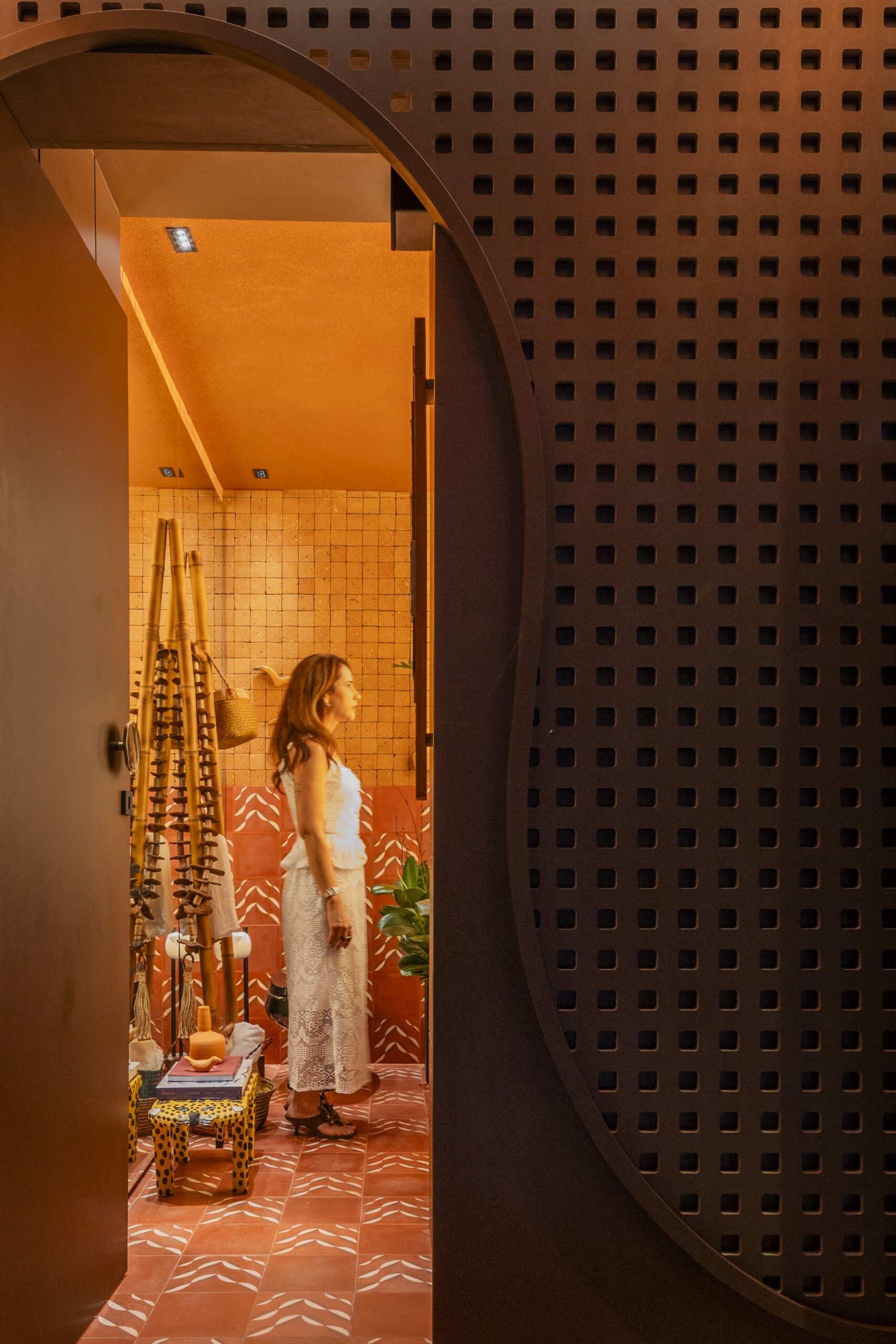
At the Casa LIV 2026 show, Rebeka Alves starts from a hydraulic floor inspired by the pororoca to stitch together memory, material and identity in 5 square meters
Photo: Felipe Petrovsky
By Samuel Navarro Serpa
BELÉM DO PARÁ — Some projects begin with a floor plan and others with a recollection. Terra de Dentro, a 5-square-meter hall and powder room with architecture and interior design by Rebeka Alves, created for the Casa LIV 2026 show in Belém, Pará, belongs to the second group. A native of Recife with a career built in northern Brazil, Rebeka blends Northeastern roots and Amazonian references to translate childhood memories and manual know-how into a contemporary language, without reproducing a specific era or place. Images by Felipe Petrovsky.
Underfoot lies the starting point. Pororoca hydraulic tile, an exclusive design by Igapó Ladrilhos, draws on the phenomenon in which the tide pushes against the current of Amazonian rivers. From it come the visual rhythm, colors, textures, stones and joinery. In such a small area, the floor takes the leading role and organizes the decisions that follow.
Molded and pressed in pigmented cement, the pieces show slight differences in tone and edge, variations the architect keeps in view instead of pursuing a mark-free surface. It recalls the floors of Brazilian homes from other decades and brings the powder room closer to a recognizable domestic repertoire.
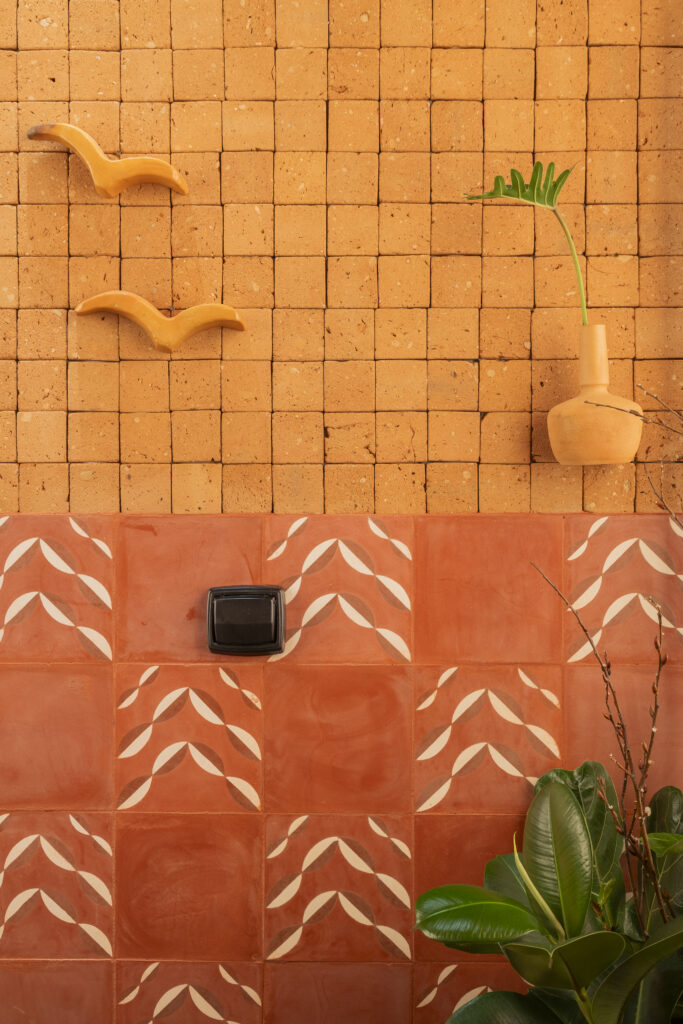
Photo: Felipe Petrovsky
Beige, terra cotta and green make up the palette, which echoes earth and vegetation. On the walls, the Calda de Maple mineral coating from Dellacor reproduces the look of soil and adds depth, while Due Vecchio, from Nina Martinelli / Studio Decor, widens the range of finishes.
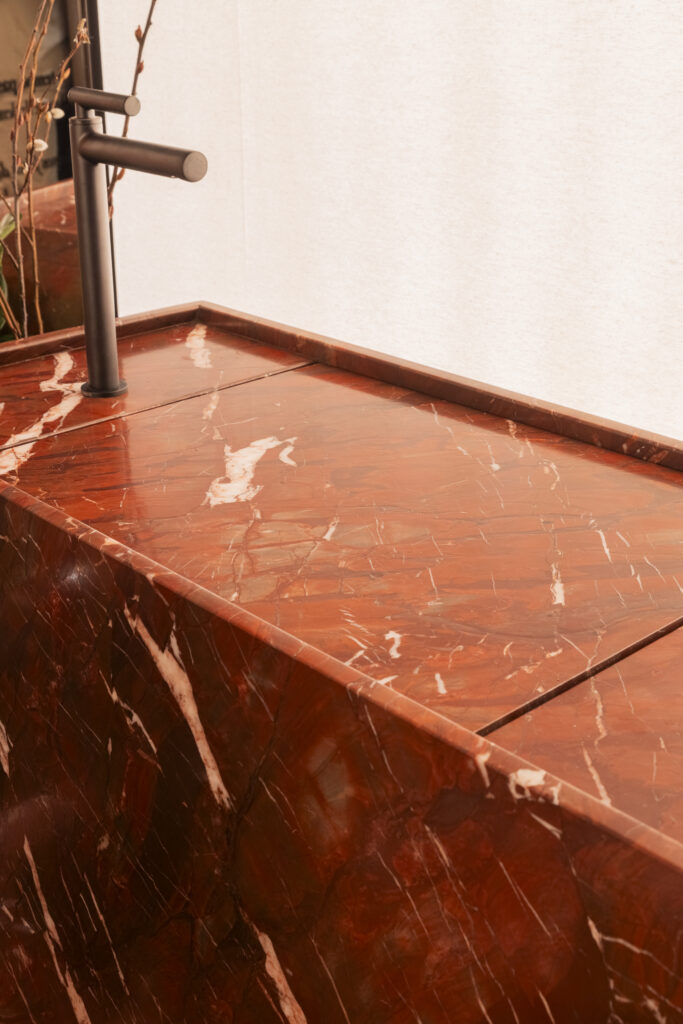
Photo: Felipe Petrovsky
Executed by Marmo Atelier, the Napoleon Bordeaux natural stone countertop is brushed; its veins and color nuances draw the eye and match the intensity of its setting.
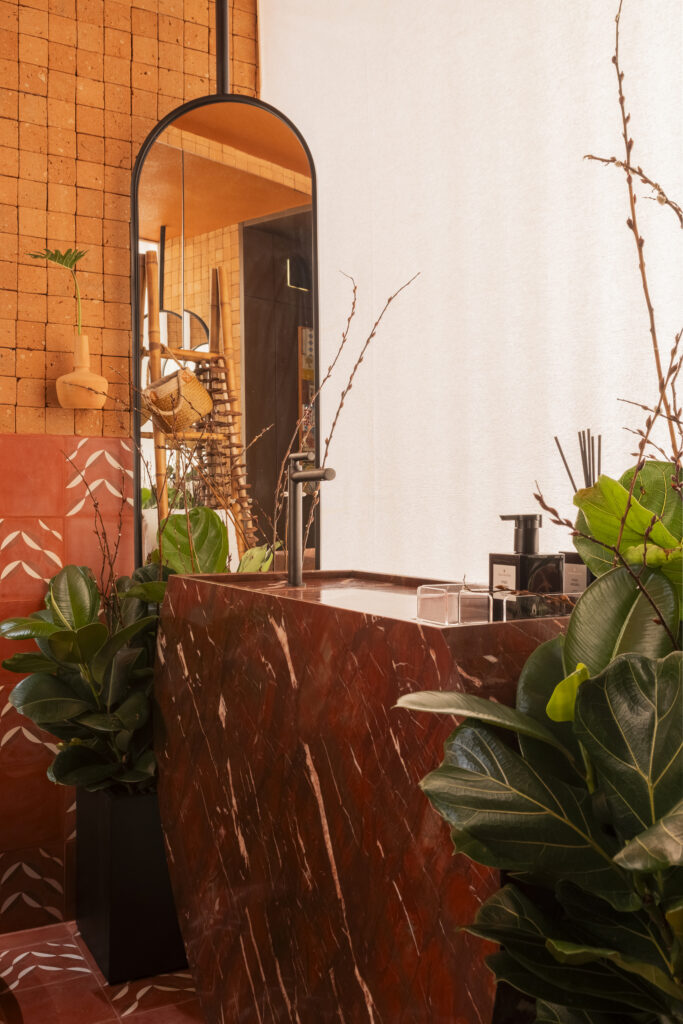
Photo: Felipe Petrovsky
In contrast to the handcrafted surfaces, ceramic fixtures from the Monte Carlo line and the Beta faucet, both by Deca, bring a current look and keep the room from turning into a nostalgic quotation. Curved mirrors from Industrial Company, framed in matte black metal tubing, soften the outlines and enlarge the perception of the space through distinctive angling. Industrial Company also handled the metalwork.
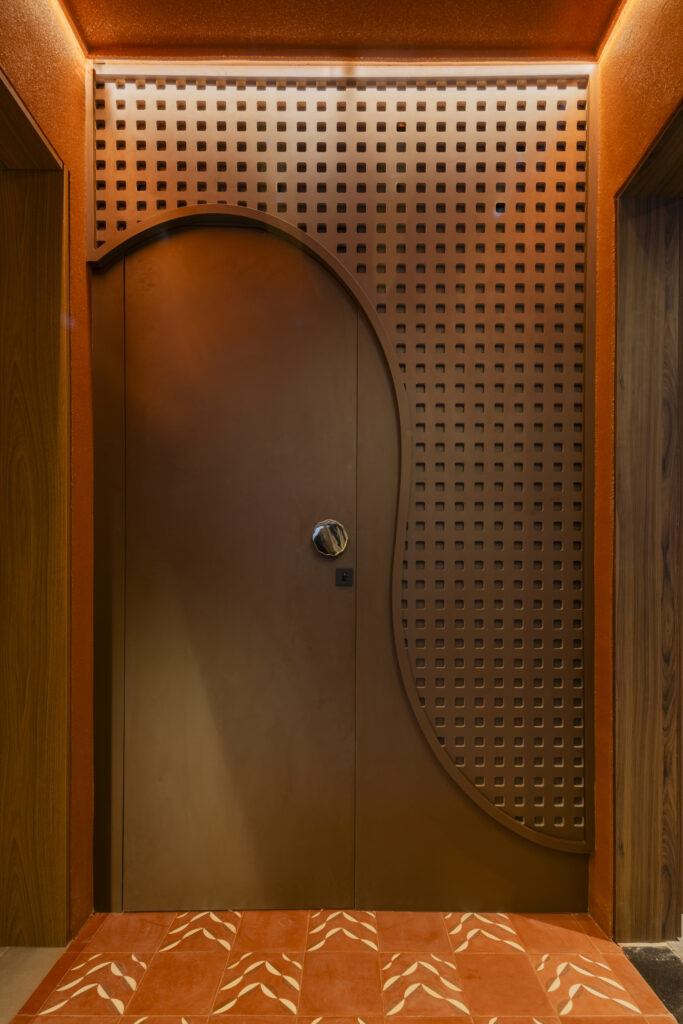
Photo: Felipe Petrovsky
Machined in Crepúsculo MDF, part of Flora’s Instantes da Floresta collection, the organic mashrabiya by Navvo creates visual movement through its play of solids and voids, engages with natural forms and evokes, in a contemporary key, a traditional element of Brazilian architecture. Its lightness contrasts with the solidity of the stone. A camouflaged door by Concrem Portas keeps the planes continuous, and the Jaspe pull by Jador completes the composition discreetly.
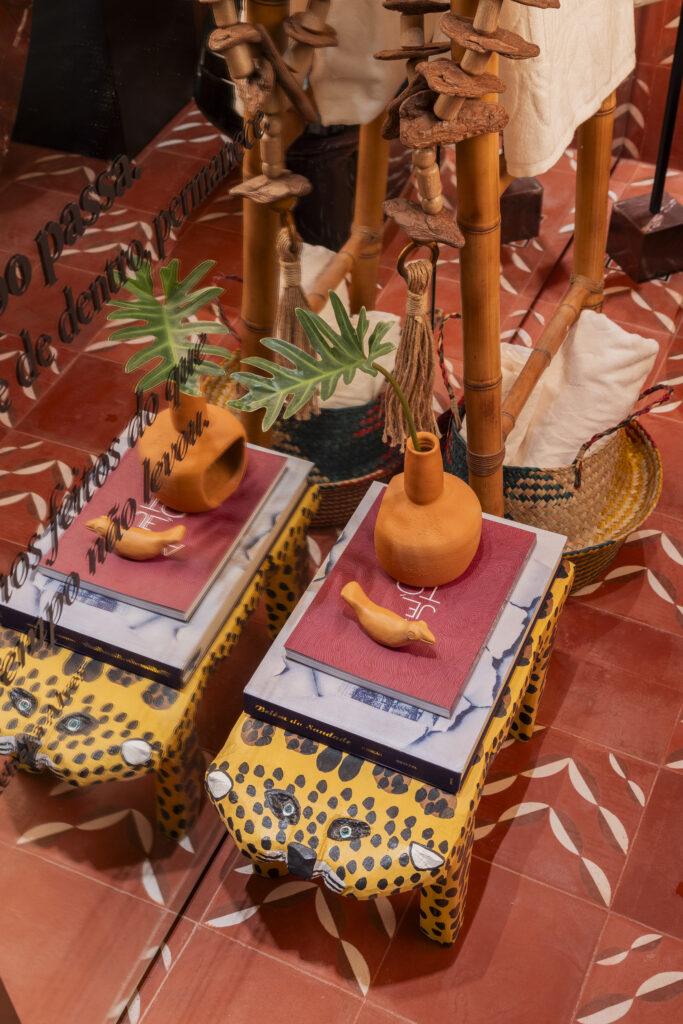
Photo: Felipe Petrovsky
Pieces by Marinaldo Santos, from Pará, bring the room closer to Amazonian production; the wooden jaguar bench by Gervásio, from Minas Gerais, recalls the country’s fauna; and ceramics by Família Santana point to knowledge passed down across generations. It is in the works and objects that the narrative of origin takes shape.
With no daylight, the space relies on artificial means to reveal textures and materials. A stretched screen in natural fabric filters diffuse brightness, while small spotlights pick out relief and details. Tritech provided the sound system and the automation of audio and lighting, which complete the atmosphere and make time spent there a sensory experience, not just a visual one.
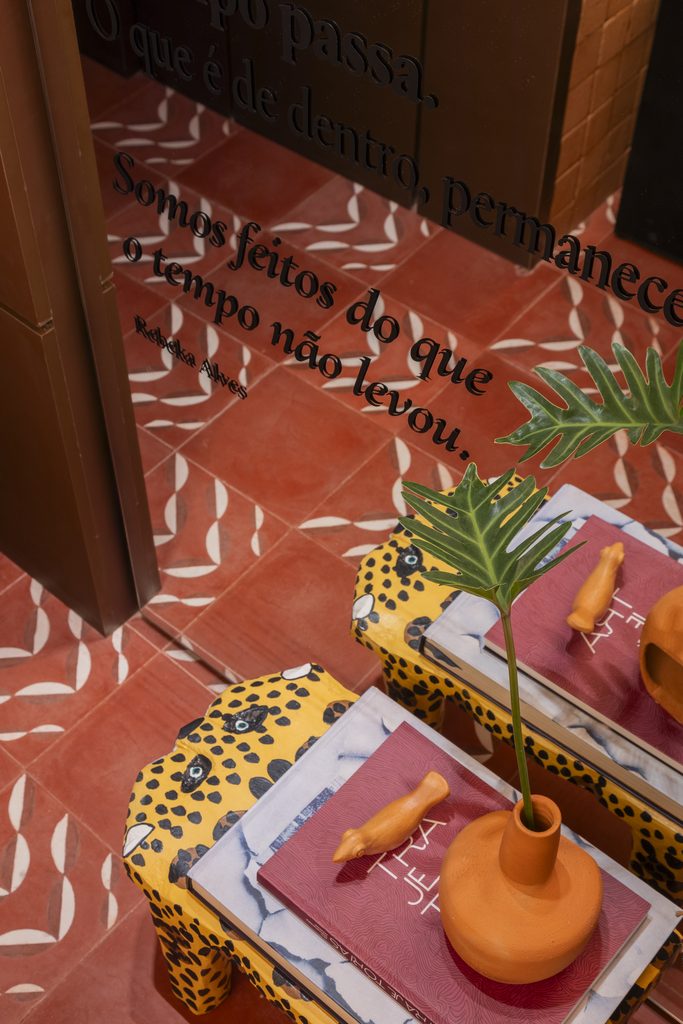
Photo: Felipe Petrovsky
A phrase on the mirror sums up the proposal: “Time passes. What comes from within remains. We are made of what time did not take away.” Seen in the glass, people become part of the story and recognize their own memories in the details around them.
Combining elements of mineral origin, handcrafted production and current design, the composition joins sophistication and belonging. Based in Belém, Pará, the firm Rebeka Alves Arquitetura, known as RA Rebeka, works with identity, materiality and cultural references. For Rebeka, architecture gains significance when it creates bonds with the stories, memories and feelings of the people who experience it. Within just 5 square meters at Casa LIV 2026, Terra de Dentro proves that small scale can hold a great deal of meaning: everything starts with the tile.